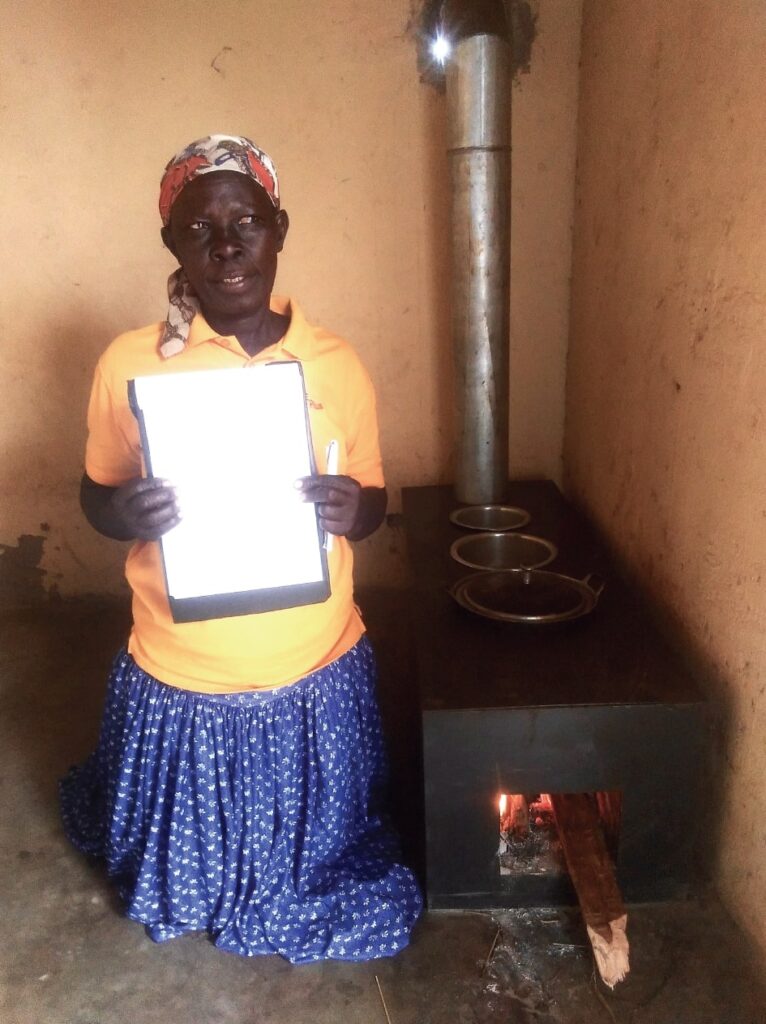
The project is now in its fourth year of implementation, with over 1,200 stoves
installed and introduced to vulnerable families across several sub-counties of Lira
District. In Agali Sub-County alone, 415 stoves have been provided in 13 villages,
benefiting approximately 3,320 people. The last installations in Agali were completed
in April 2024.
More than a year later, we wanted to assess whether the stoves are still being used,
whether the trees planted as part of the stove owners’ participatory commitment are
being properly nurtured and growing well, and what the overall impact of the
intervention has been.
Our local team carried out a monitoring visit in August and September 2025. The
results were encouraging: the anticipated outcomes have largely been achieved.
Approximately 90% of the stoves remain in use, while about 10% are not, for various
reasons. A few stoves require minor repairs, mainly to leaking steel chimneys outside
the kitchens.
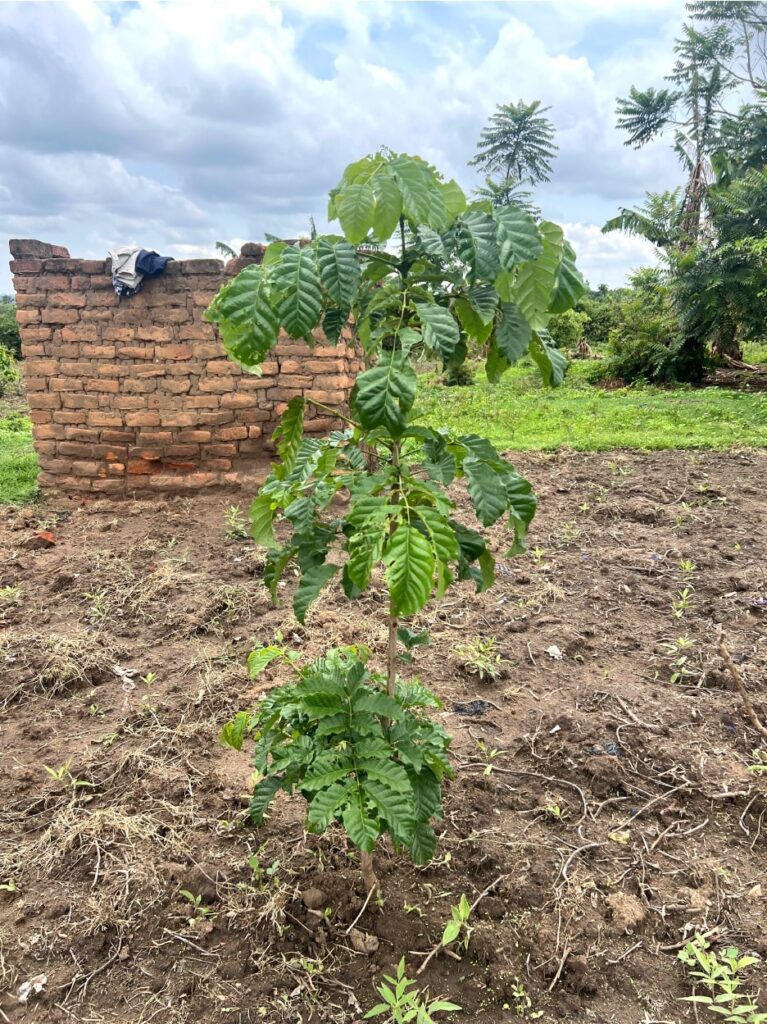
Most of the planted trees, ten per household, are in good condition and well
maintained. Particularly encouraging is the unintended but positive impact of the
village women’s self-help groups formed during the stove installation process. These
groups have organized themselves and are now contributing significantly to the
socio-economic life of their communities.
The reasons why some stoves are not in use still need to be investigated before any
de-installation takes place. Possible factors include cultural habits, limited knowledge
or skills in stove use, lack of suitable cooking utensils, or simple neglect. A follow-up
visit is planned for January, which will provide valuable lessons for improving our
future work.